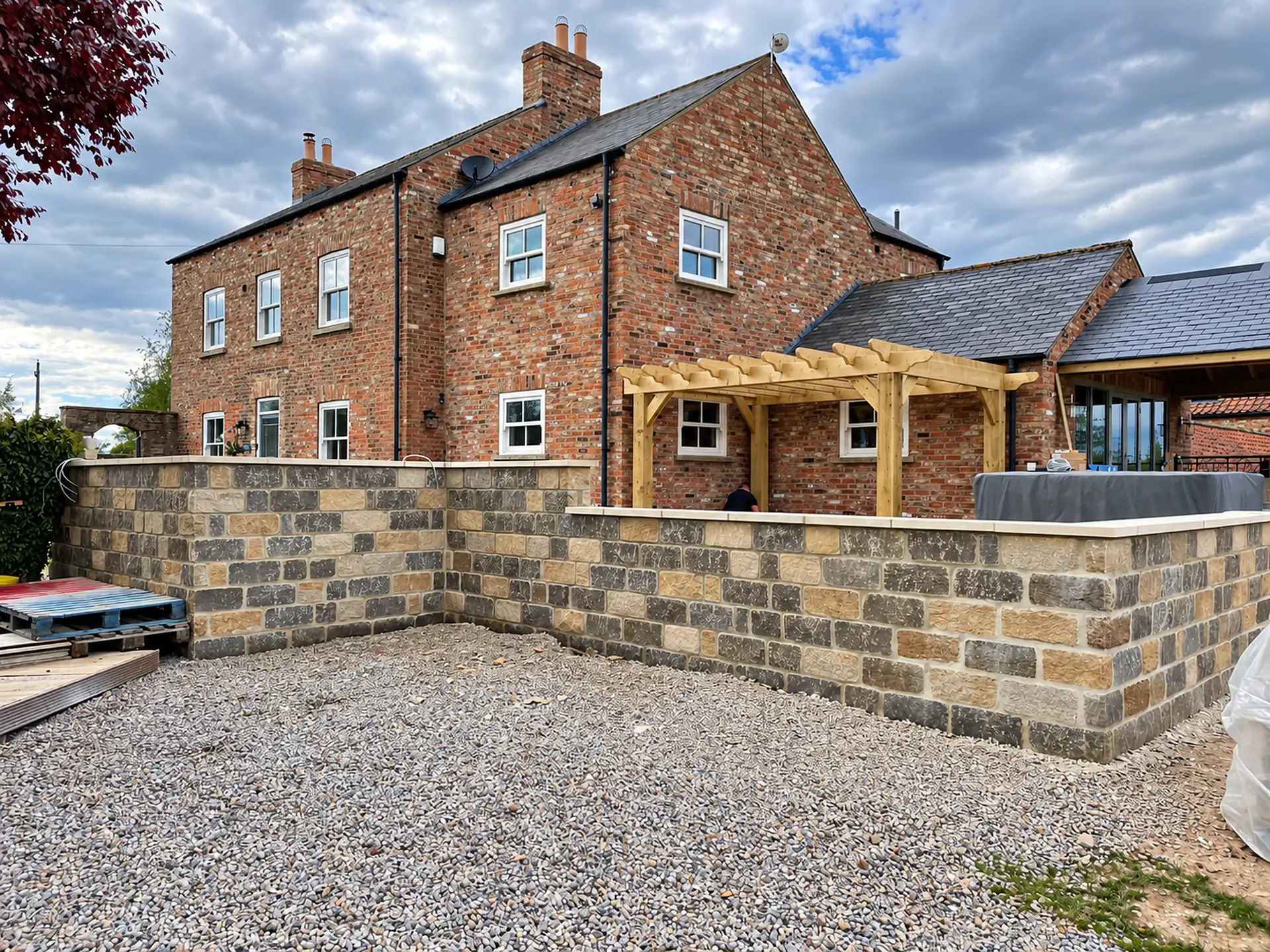
Most houses in North Yorkshire built before the First World War have solid walls of stone or brick, laid in lime mortar. They were designed to take in a little moisture and let it out again. Lime is what makes that work, and it is why so much damage to old houses starts with a well meaning repair in cement.
Why old walls need to breathe
A solid stone wall has no cavity and no damp proof course in the modern sense. Rain wets the outer face and the wall dries out through the joints and the stone. Lime mortar is softer and more porous than the stone around it, so moisture and movement go through the joints rather than the stone.
That is the whole idea: the mortar is the sacrificial part. It wears slowly and can be raked out and renewed every few generations, while the stone lasts for centuries.
What goes wrong with cement
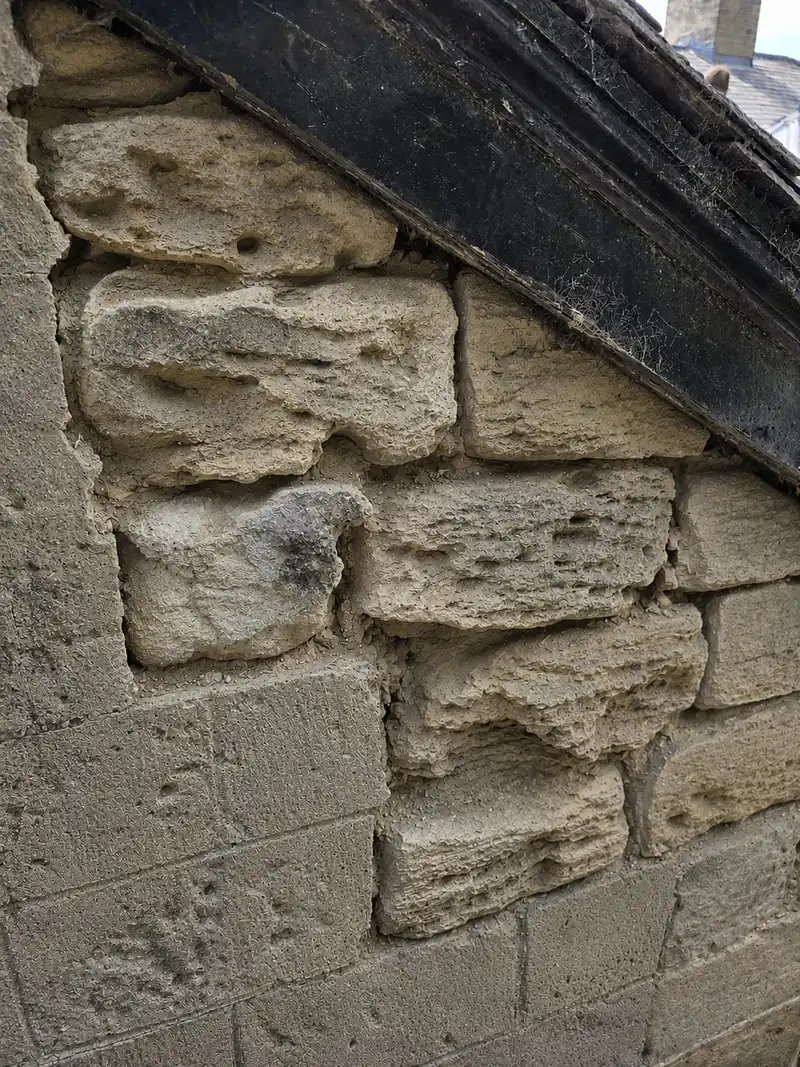
Cement mortar is hard and far less breathable. When an old wall is repointed in cement, the water that used to escape through the joints is trapped. It goes into the stone instead, and in winter it freezes. Over a few years the faces of the stones start to crumble and flake away, while the cement joints stand proud.
Inside, trapped moisture shows up as damp patches, blown plaster and a musty smell. People often reach for injected damp proof courses or waterproof coatings, which can make the problem worse by trapping even more moisture.
Lime putty and NHL
There are two broad kinds of lime used for mortar. Non hydraulic lime, usually bought as lime putty, sets slowly by absorbing carbon dioxide from the air. It is very soft and breathable. Natural hydraulic lime, known as NHL, sets partly by reacting with water, so it sets faster and harder. It comes in grades such as NHL 2, NHL 3.5 and NHL 5, from softest to hardest.
The right choice depends on the stone, how exposed the wall is and what was used originally. Soft sandstone and sheltered walls suit a softer mix. Chimneys, copings and exposed gables need something more durable. The sand matters as much as the lime: it sets the colour and texture of the finished joint.
How repointing should be done
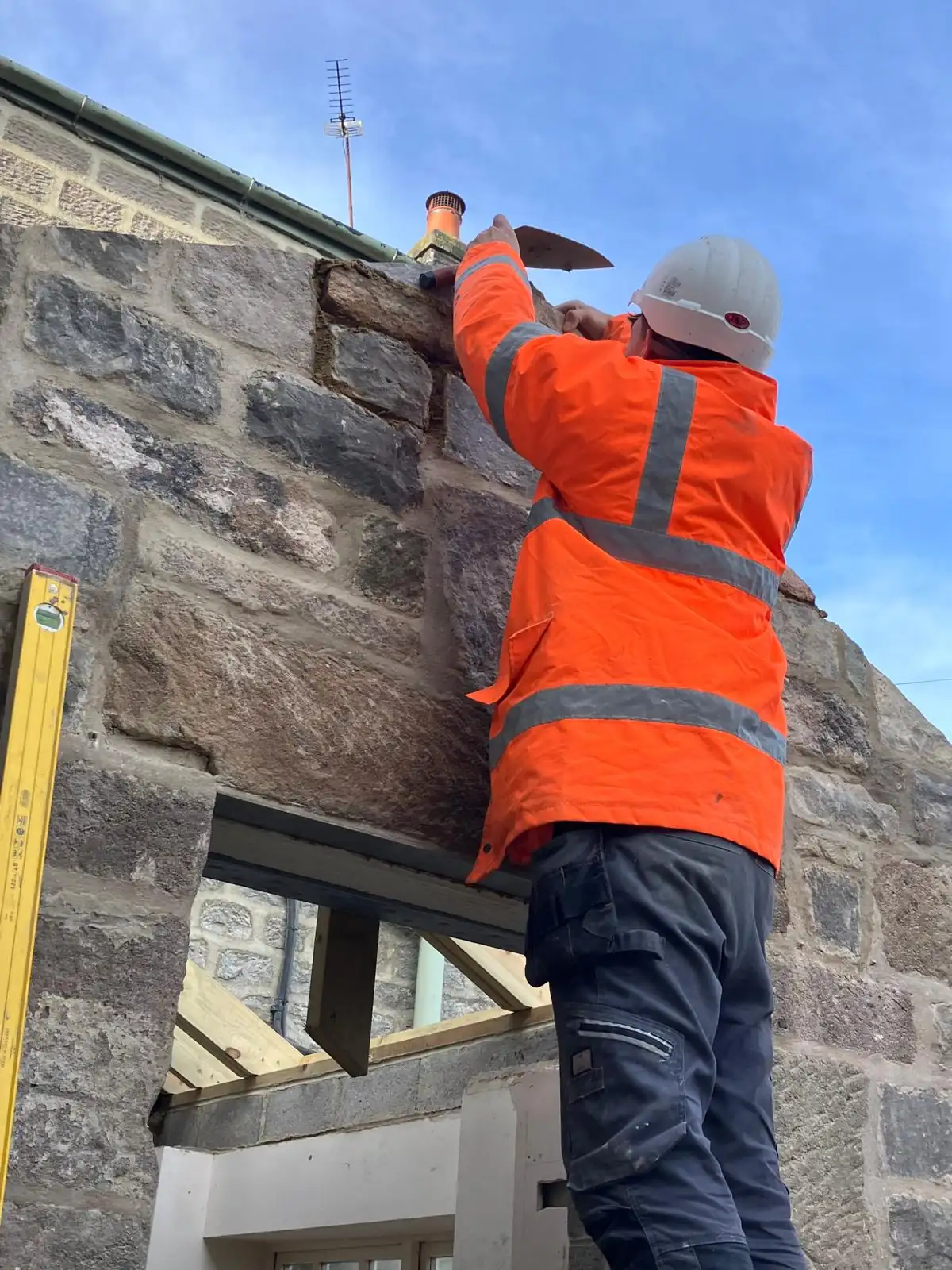
- Rake out the old mortar by hand to a depth of around twice the width of the joint, without damaging the edges of the stones.
- Brush out the dust and dampen the wall so it does not suck the water out of the new mortar.
- Press the new mortar in firmly in layers, working it into the back of the joint.
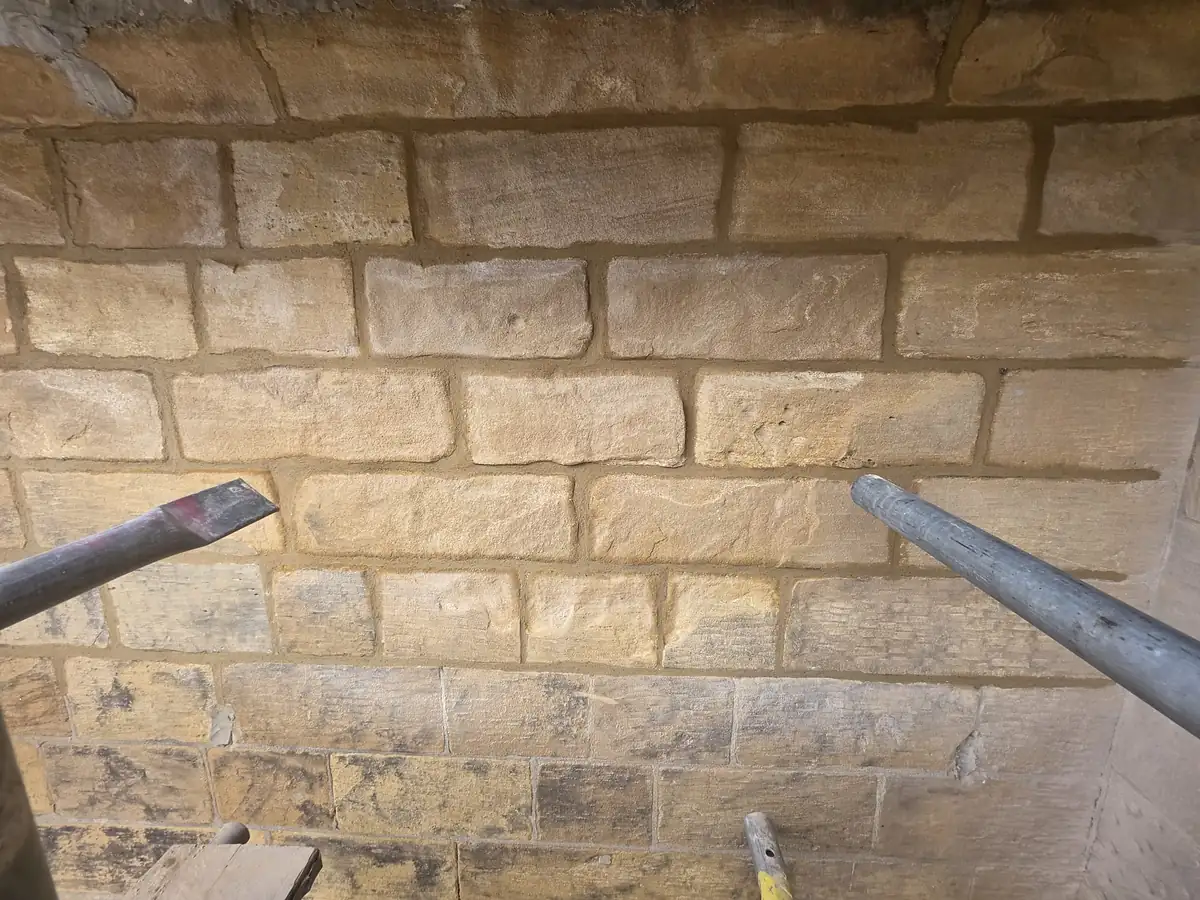
- Finish the joint to suit the wall, usually slightly recessed and brushed or struck back once it has started to firm up, so the stone edges read clearly.
- Protect the work from sun, wind, rain and frost while it cures, and keep it damp for the first few days.
Timing
Lime does not like frost. We avoid lime work outside in the coldest months and protect anything done in early spring or late autumn. The best time is from spring to early autumn.
Lime render and plaster
The same principle applies inside and to render. Old walls finished in gypsum plaster or cement render often show damp at the base. Replacing them with lime plaster or lime render lets the wall dry out. It takes longer to apply, and it is worth it.
Why we care about this
Lewis spent years on North Yorkshire estates, including Swinton Park, Rudding Park and Newby Hall, where old stone has to be repaired properly. We choose the lime mortar to suit the wall. See period restoration and our estate work.